
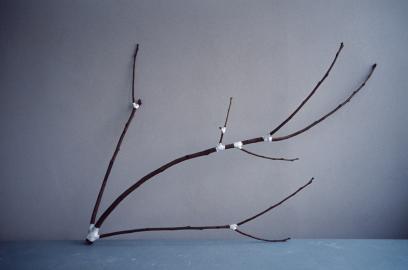

The exhibition ALL IS BUT TEMPORARY, conceived for Clervaux – Cité de l’image, brings together a series of photographs by Kay Walkowiak. These works offer a poetic and philosophical meditation on transience, transformation and the human longing for permanence. In various locations – from Japan to India and Europe – Walkowiak explores in his works how culture, form and matter are bound to the irreversibility of time. Each series becomes a fragment of a broader reflection on transience, revealing the beauty and melancholy inherent in the temporal flow of life.
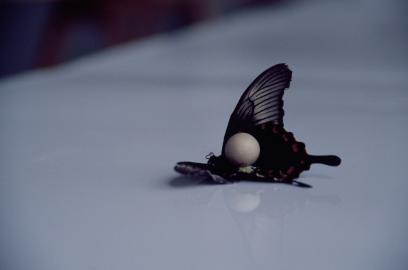
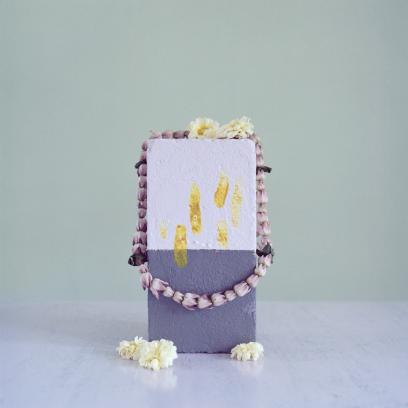
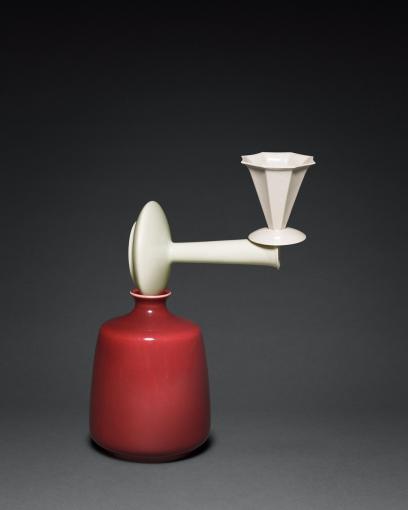
In Ephemera (2008), created in Tokyo, Walkowiak takes up the Japanese concept of ‘mono no aware’ – the subtle awareness of the transience of all things. In quiet, poetic arrangements – a bandaged branch, a weighted butterfly, wilted flowers – beauty and loss meet. Like visual haikus, the images invite mindful contemplation and convey a quiet acceptance of passing.
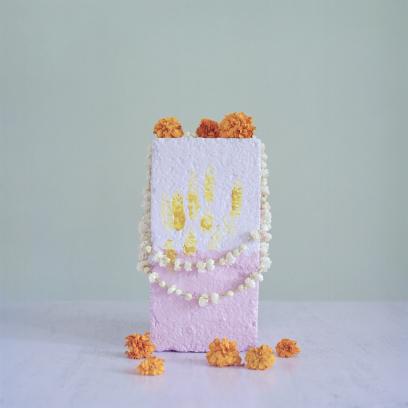
In the arcades leading to the church, In Worship (2013) turns its gaze towards India and explores the desire to escape temporality. Vibrantly coloured objects adorned with garlands oscillate between ritual and abstraction. Yet it is precisely their transience that undermines the claim to eternity and points to a universal longing: to capture meaning in the flow of time.
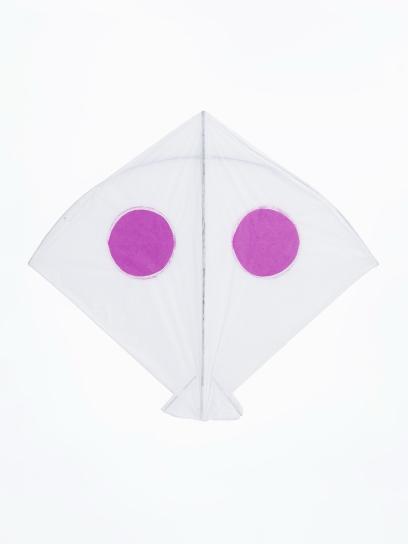
The Mechanics of Form (2012), installed opposite the church, takes up the kite festival in Gujarat. The ascending kites become symbols of human longings – hovering between new beginnings and transience. In minimalist compositions, Walkowiak transforms the cultural event into a poetic metaphor for the human condition.
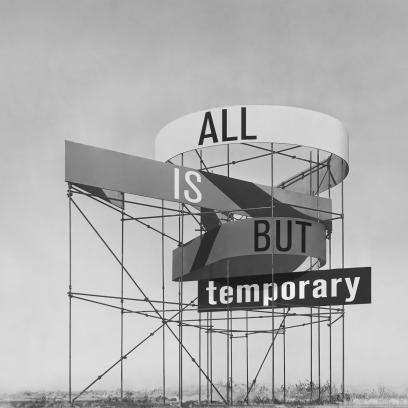
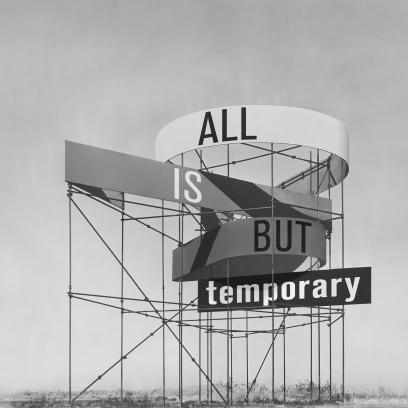
With Display (2024) in the arcades of the Grand-Rue, the artist turns his attention to the relics of the consumer age. An abandoned advertising installation, adorned with reflective inscriptions, becomes a symbol of the fading of former promises of progress and a silent memento mori of modernity.
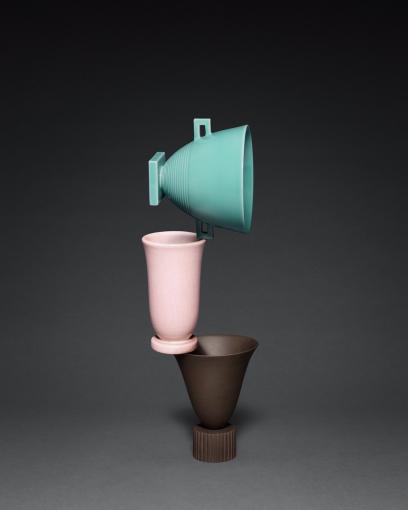
In the “Jardin du Brahaus”, the series Misfits (2024) questions the idea of museum preservation. Re-arranged objects appear in fragile, unstable constellations, exposing the claim to permanence as an illusion. The museum itself becomes a symbol of a fragile order.
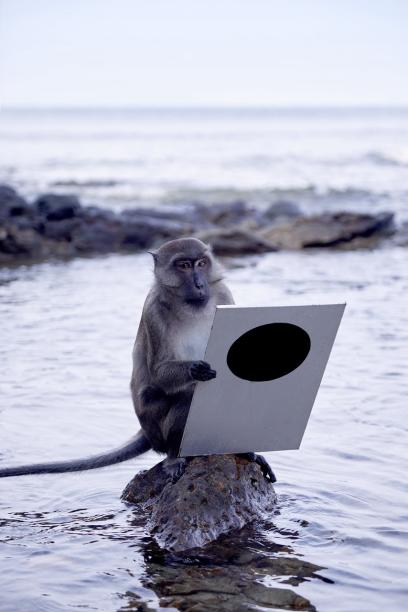
Encounters (2023) in the castle gardens brings art and nature into direct dialogue. Sculptural forms encounter wild monkeys, whose reactions dissolve the boundary between cultural construction and natural existence. Here, art appears as part of a larger, shared fabric of time.
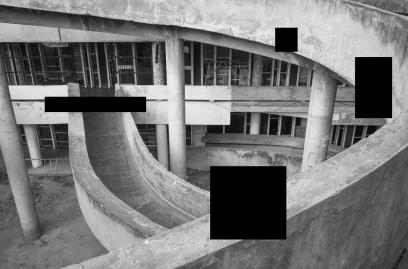
Finally, at Clervaux railway station, A Different Order (2018) examines the city of Chandigarh. Geometric structures overlay the traces of decay, revealing the tension between utopian order and living change. Decay itself becomes an aesthetic statement.
Together, these works form a meditation on the passage of time – across cultures, materials and ideologies. The title All is but Temporary is not a lament, but an affirmation that all beauty arises from transience and all form from transformation. In this context, photography itself becomes a metaphor and a medium of transience. Each image captures a fleeting moment, preserving what will never return, whilst simultaneously affirming that nothing is truly fixed. In this paradox lies the quiet power of Walkowiak’s art: to make the grace of the ephemeral visible and to remind us that every act of seeing is ultimately an encounter with time itself.
Biography
Kay Walkowiak (*1980, Austria) lives and works in Vienna. His practice unfolds across film, installation, performance, and photography, investigating how temporality and performativity shape perception and meaning. Drawing on long-term artistic research and intercultural engagement, Walkowiak critically examines the foundations of Western tradition by contrasting them with non-Western concepts of time, subjectivity, and relational models of coexistence. Grounded in the concept of speculative fiction, his works and exhibitions remain open structures in which perception, memory, and speculation intersect as processes of continuous transformation. Walkowiak’s work has been presented in numerous solo and group exhibitions at international institutions and museums. He was a nominee for the Grand Prize for Art of the Federal Province of Salzburg (2026) and is the recipient of numerous awards and grants, including the Sculpture Prize of the Federal Province of Salzburg (2019), the Heinrich and Anni Sussmann Award (2011), and the Theodor Körner Award (2010).