
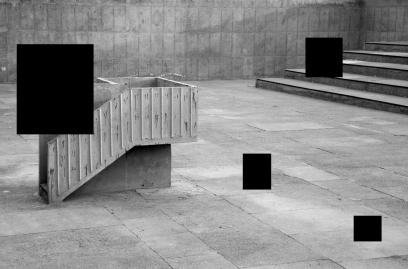
A DIFFERENT ORDER (2014-2018)
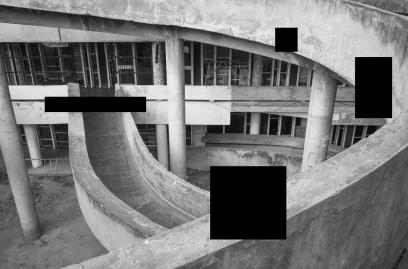
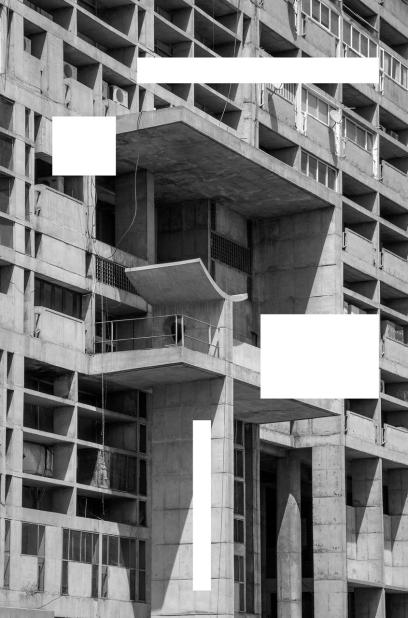
The black-and-white photographs of the series A Different Order showing architectural views of Le Corbusier-designed buildings for the Indian city of Chandigarh are superimposed with an open grid of black or white geometric forms. They refer to the primacy of the geometric form in the modernist conception of art to which the Swiss-born architect was committed. In the mid-1950s, he built the planned city of Chandigarh, India, in accordance with a system of measurements and proportions that he developed. His architectural formal utopia is informed by his idea of a universal, timeless formal language as well as the vision of a modern, classless society that was to be “formed” by the corresponding architecture. The purity of the geometric forms in the photographs is contrasted with views of the city of Chandigarh, in which the architecture’s clear formal language is disrupted by marks of use, overgrown vegetation, and other signs of decay. The dichotomy between Le Corbusier’s conceptual considerations and his Western conception of form and utopia, on one hand, and the culture of India and the reality of life there, on the other, is underscored by the formal principle of superimposition. In the pictorial composition, the grid of the black or white geometric shapes and views of the city function as two levels detached from each other. Ultimately, the work reflects on the failure of the utopian city, whose ideal of perfect order could not withstand the natural processes of transformation and time. The city’s masterplan left no space for the organic unpredictability of life—for adaptation, and growth, which are the natural laws governing all living systems.