
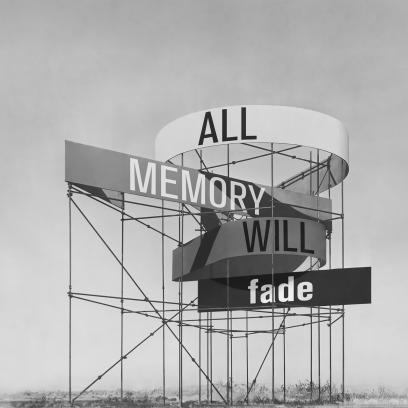
DISPLAY (2024)
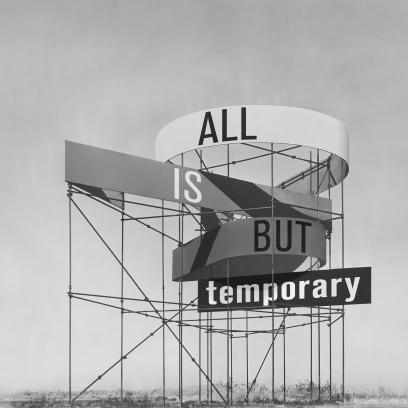
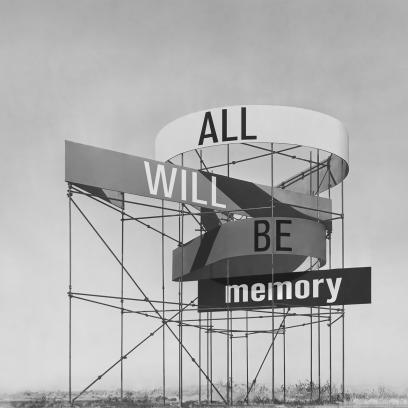
The photographic series Display shows a complex work of advertising architecture from the 1950s, the years of the post-war economic boom, standing alone in a deserted landscape. With its dynamic of displays and elegant steel braces, the structure almost has the appearance of a modern sculpture, lending emphasis and impact to the statements conveyed on the display. However, where products of mass consumption were once extolled, the display’s message in the newly created themes resorts to poetry that is anything but commercial: statements such as “All is but temporary,” “All will be memory,” or “All memory will fade” introduce a breach in the perspective as a moment of reflection on the transience of all things and reinterpret the formal dynamic of the sculpture as the expression of constant transformation. The connection between the content and form of the message’s medium on the one hand and the subject as recipient on the other is manifestly emphasized, but also reinterpreted in a larger philosophical context. In Lacanian psychoanalysis, the concept of the “objet petit a” represents a fundamental lack or void within the subject, which arises from the process of separation from the mother and the entrance into the symbolic order. This lack leads to desires that are never fully satisfied and drives the subject’s search for fulfillment. In the context of capitalist consumerism, this concept can be understood as being exploited by marketing and advertising industries. Capitalism thrives on creating and perpetuating desires for goods and services by mobilizing individuals’ unconscious desires, turning consumption into a continuous attempt to alleviate an underlying sense of lack. But the lack cannot be resolved by consumption, as the subject gets trapped in an endless cycle of temporary vicarious satisfaction (substitute gratification). Within the reality of constant change, the sentences on the displays suggest a radical surrender to the fleeting nature of everything, including our own existence.